|
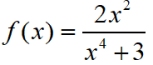
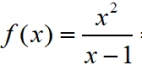
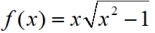
To determine algebraically whether a function is odd, even, or neither, substitute (-x) for every x value in the function, simplify, and compare the result to the original function (f (x)).
If f (-x) = f (x), the function is even. (results are the same)
If f (-x) = -f (x), the function is odd. (results are negations)
If neither of these situations exists, the function is neither.

|
Remember: The trick to working with odd and even functions is to plug in (-x) in place of x in the original function, and see what happens.
If there is no change → even. If a negation occurs → odd.
Note: In the world of functions, most functions are "neither".
|

NOTE: The re-posting of materials (in part or whole) from this site to the Internet
is copyright violation
and is not considered "fair use" for educators. Please read the "Terms of Use". |
|