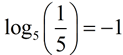
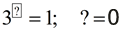
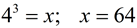
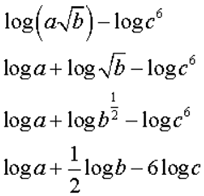
|
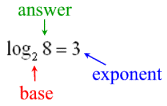
A logarithm is an exponent.
In the example shown at the right, 3 is the exponent to which the
base 2 must be raised to create the answer of 8, or 23 = 8.
In this example, 8 is called the antilogarithm base 2 of 3. |
|
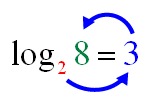
Try to remember the "spiral" relationship between the values as shown at the right. Follow the arrows starting with base 2 to get the equivalent exponential form, 23 = 8. |
|
 A logarithm base b of a positive number x is such that:
for b > 0, b≠ 1, logb x = y if and only if by = x.
The log bx is read "log base b of x".
The logarithm y is the exponent to which b must be raised to get x. |
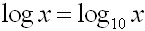
Logarithms with base 10 are called common logarithms. When the base is not indicated, base 10 is implied.
 |
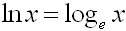
Logarithms with base e are called
natural logarithms. Natural logarithms
are
denoted by ln.
 |

Using the properties of "exponents", we can arrive at the properties of "logarithms".
Properties of
Exponents:
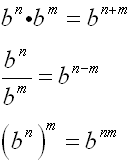
|
|
Let's find the connection!
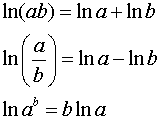
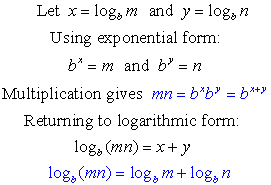 Similar investigations lead to the other logarithm properties.
|
Properties of
Logarithms:

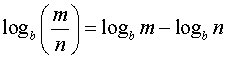

|
|
Also,  |
These log properties remain the same when
working with the natural log, ln( x).

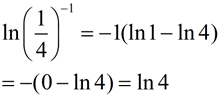
Remember: ln 1 = 0 and ln e = 1 |
|
|
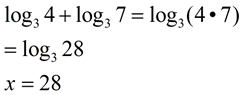
Examples:
Change of Base Formula: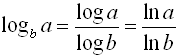 |
|
There is a property called the Change of Base Formula that exists regarding logarithms.
This formula is used with older models of calculators that cannot accept subscripted typing on the screen. While a key is present for log base 10, this formula is needed for log entries with other bases. |
Let's take a look at how this formula was created, using "Properties of Logarithms":
Origins of Change of Base Formula:
|
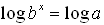
Set = x. |
|
Convert to exponential form. |
|
Take common log of both sides. |
|
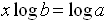
User power rule. |
|
Divide by log b. |
|
|
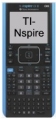
How to use your graphing calculator for working
with
logarithms
Click here. |
|
|
|
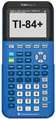
How to use
your graphing calculator for
working
with
logarithms
Click here. |
|
|

NOTE: The re-posting of materials (in part or whole) from this site to the Internet
is copyright violation
and is not considered "fair use" for educators. Please read the "Terms of Use". |
|
 in exponential form.
 in logarithmic form.